
north · May 15, 2023
Taynal Mosque
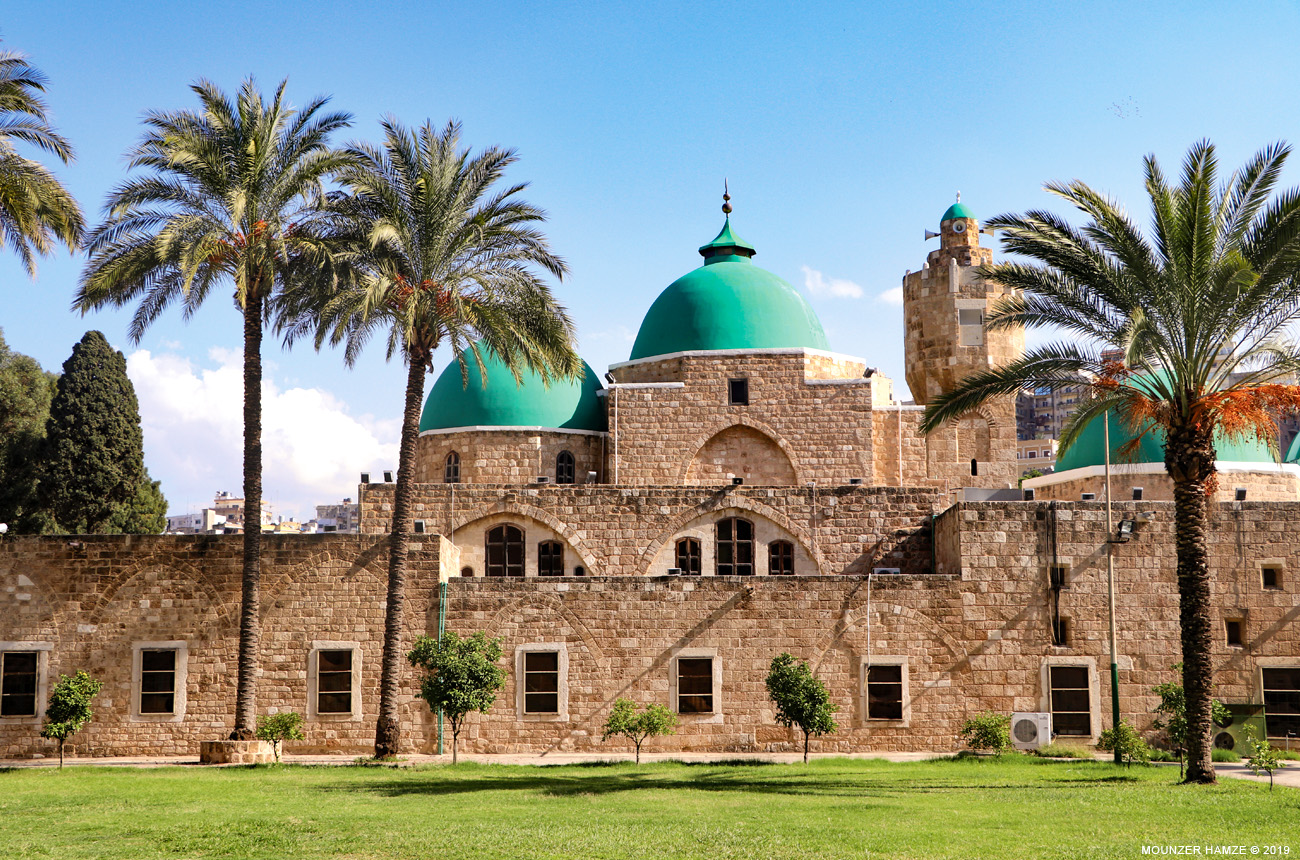
Tripoli houses a unique mosque that sets it apart from other monuments of the city. It is located in the old souk, on the left bank of the Abu ‘Ali River, near the Bâb al-Raml cemetery.
Structure
The mosque is known as Taynal mosque, since it was commissioned by Sayf ad-Din Taynal an-Nasiri al-Ashrafi, governor of Tripoli, who reigned during the mid-14th century AD.
The mosque is accessed through a northern entrance, which is marked by a large pointed arch containing a rectangular door surrounded by superimposed black and white stonework, in accordance with the _ablaq_ system. This entrance leads to the first section of the mosque: the entrance hall. It is a rectangular space divided into three aisles by four granite columns of various sizes.
Next, a monumental portal entirely decorated in _ablaq_ opens onto the second section of the mosque. It is adorned with multicolored marble marquetry panels with geometric decorations, with _muqarnas pattern_ topped by a small dome, and with inscriptions in _naskhi_ and square Kufic script.
The second section consists of a central space, covered with a dome supported by four massive pillars, surrounded by a wide gallery. On its south wall, a _mihrab_ rests on two small columns, contrasting with a _minbar_ made of wood ornamented with geometric motifs and arabesques, as well as an inscription in _naskhi_ indicating its date of completion and the name or the craftsman.
On the east wall, there are two doors, one leading to a domed mausoleum, the other to the minaret. The latter is a small tower with a square then octagonal shaft, ending in a parapet with a small lantern topped by a dome.
The layout and granite columns with Corinthian capitols – clearly reclaimed materials – indicate that the Taynâl mosque was constructed on the site of ancient buildings, probably a Carmelite church from the Crusades period, itself built over a temple that date back to the Roman era.
Motifs
The marble marquetry on the indoor walls and floors uses motifs that are common in the Mamluk decorative vocabulary, such as stars, swastikas and square Kufic. The latter is a type of geometric Kufic script, widespread in Iran and Iraq from the 13th century AD and that became very frequent during the Mamluk era, especially in Cairo where it first appeared in the mausoleum of Qala’un (1284-85). It is also found on other monuments in Tripoli, such as the madrasa al-Burtasiya.
References:**
https://www.qantara-med.org/public/show\_document.php?do\_id=344&lang=en


