
keserwan · April 28, 2023
Kabaal Site
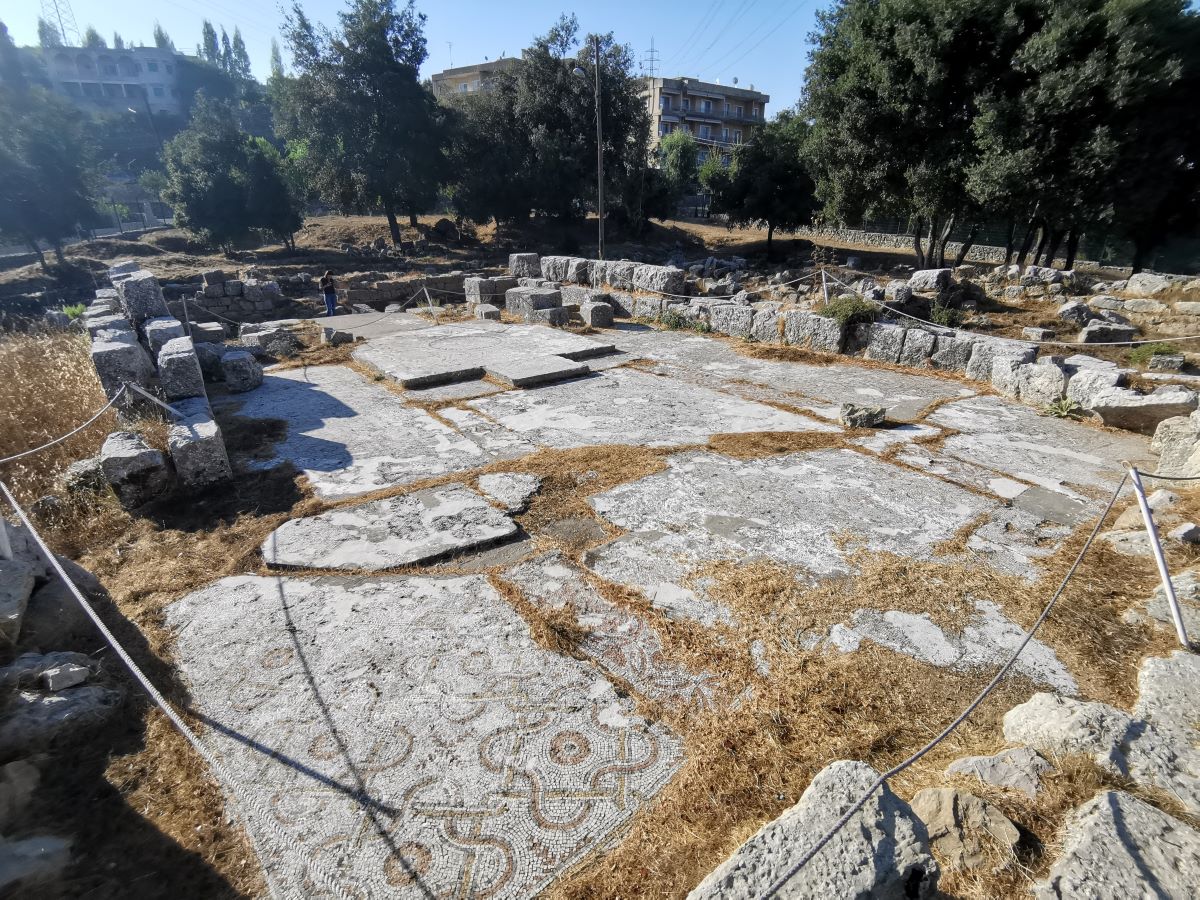
The site of Kabaal, located in Ghine village, testifies to a significant human occupation that dates back to antiquity. Although the area was barely excavated, the site features the remnants of Greco-Roman and Byzantine era structure foundations.
This article presents a brief description of the site based on what has been discovered so far by scholars.
Toponym
_Kabaal_, mentioned by archeologist Ernest Renan during his “Mission De Phenicie” trip to Lebanon in 1860.
_Kabaal_ may have several meanings, though the main theory revolves around the Tomb or the House of Baal (Lord).
Structures
The site features the remnants of a small settlement, centered by a Byzantine church built on top of a Greco-Roman era pagan temple.
The following elements can be seen on site:
Houses – Cubic shaped structures can be spotted all around the archeological site. It formed a dwelling quarter of densely built houses from local limestone, separated by a narrow zigzag-shaped street. It is unknown if the houses had an upper story.
Pottery shreds – the latter is densly found on site, which testifies to a significant production of pottery at Kabaal. However, it is unclear where the pottery workshop is located as further excavations are needed to identify its location between the structures.
Well – It can be seen on the south-eastern side of the site, most likely used for religious practices, drinking and farming.
Temple – Elements of the converted temple can be seen on site, such as columns, temple stairs and walls.
Church – The Byzantine church, built on top of the pagan temple, is the main attraction of the site. Rectangular in shape with 10x15m dimensions, it had 3 naves and spans. It holds a beautiful mosaic that feature the following elements:
\*Grid of circles and tangent spindles in interlacing cables: the circles lodge animals such as whales and antilops.
\*Octagon developed with an eagle with spread wings in the central medallion. The eagle was, in antiquity, the attribute of Zeus-Jupiter; it was transmitted to Christians to assimilate to Christ and evoke immortality.
\*Rinceau motifs, specifically that of ivy, or _hedera_ in Latin. The ivy symbolizes the permanence of the vegetative force. Like the vine, it represents eternity.
\*Tangent circles of four spindles and interlacing compositions.
Other Attraction
Not far from the site, the famous Ghine Stele is a must visit as well.
References
_\*Mission De Phenicie, Ernest Renan, 1860._
_\*La Vie Religieuse Au Liban Sous L’Empire Romain – Julien Aliquo_
_\*Les Mosaiques ProtoByzantines Du Liban, Iconographie et Symbolisme, Nada Helou_


